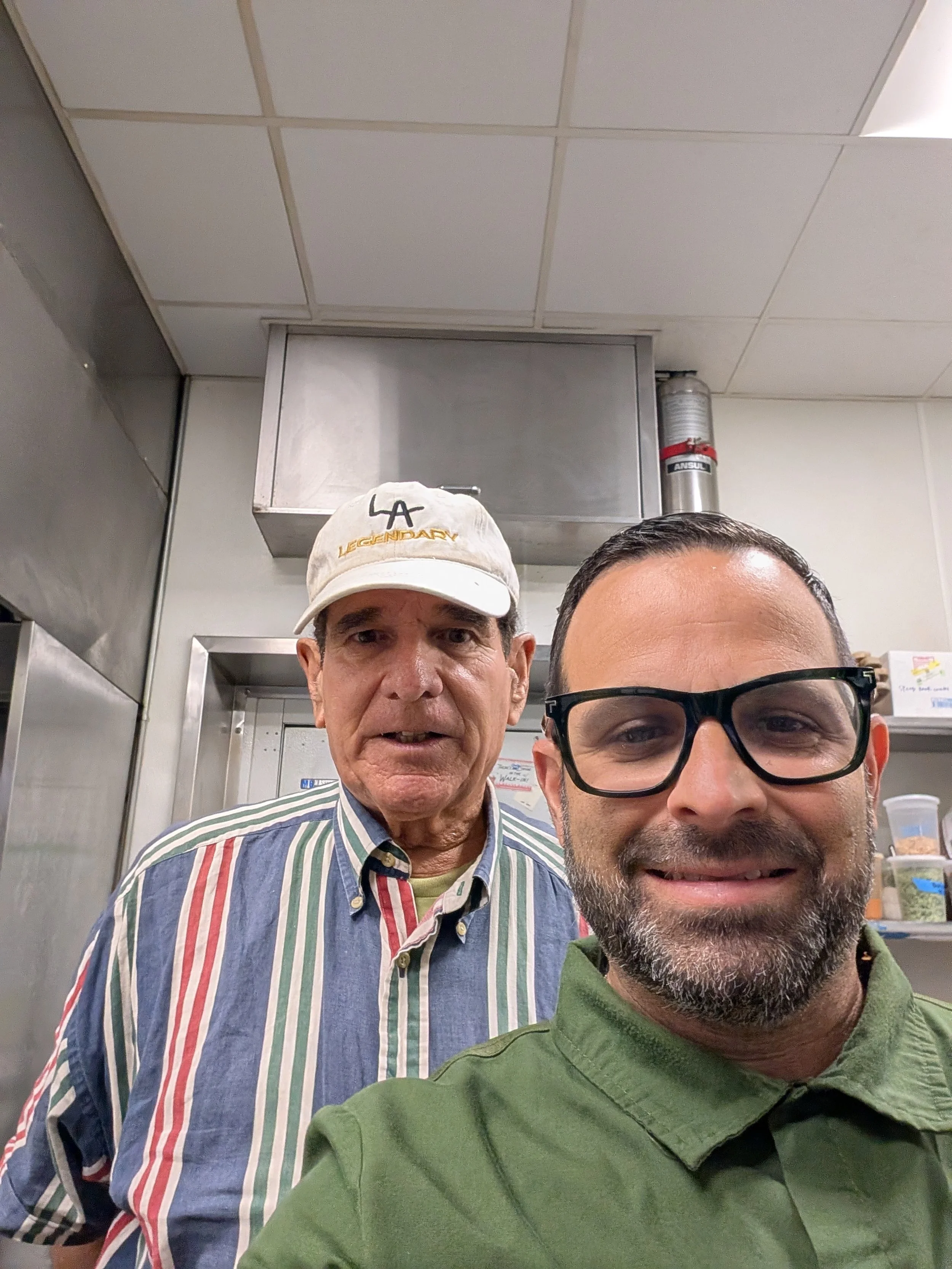
THE MAN WITH 225 ACRES On knowing where your food comes from.
On knowing where your food comes from.
THE SOURCE · 01
In 2009, I was running the western food program at Mount Lavinia Hotel in Colombo, Sri Lanka. I kept trying to find local organic ingredients and kept hitting walls.
When I looked into it, the answer was simple and infuriating. Most of Sri Lanka's organic food was being exported. The best of what the land produced was leaving the country.
That year I founded the first Slow Food convivium in Colombo. Every two months we held a dinner where the farmer sat at the table with the guests.
Not in the kitchen. Not on a card in the menu.
At the table.
I wanted people to understand the food they eat. To take dining beyond simply enjoying the meal. To know where the food was grown, how it tastes, what it cost to produce. To hear it from the person who produced it.
I still believe all of that.
I believe it more now than I did then.
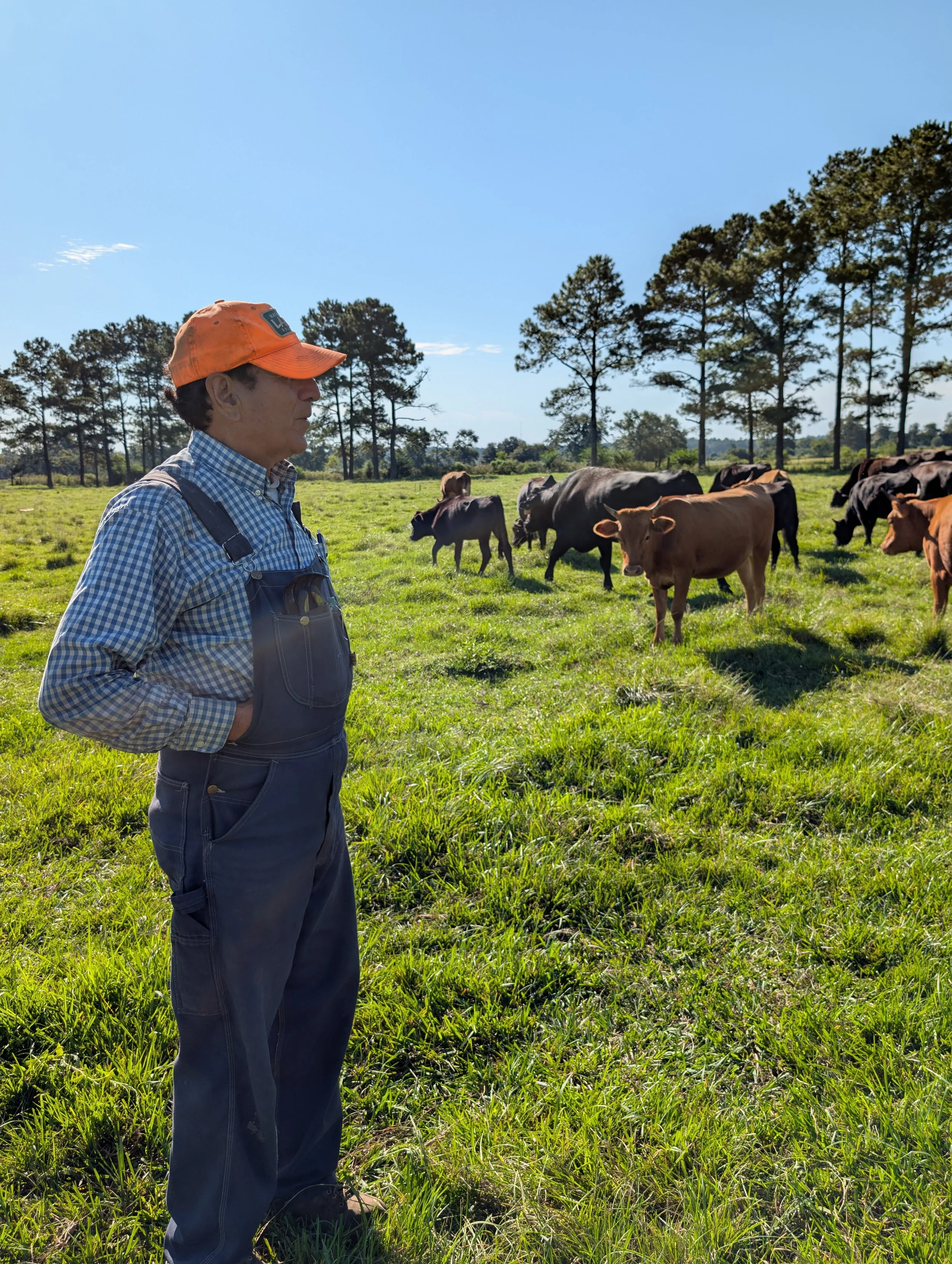
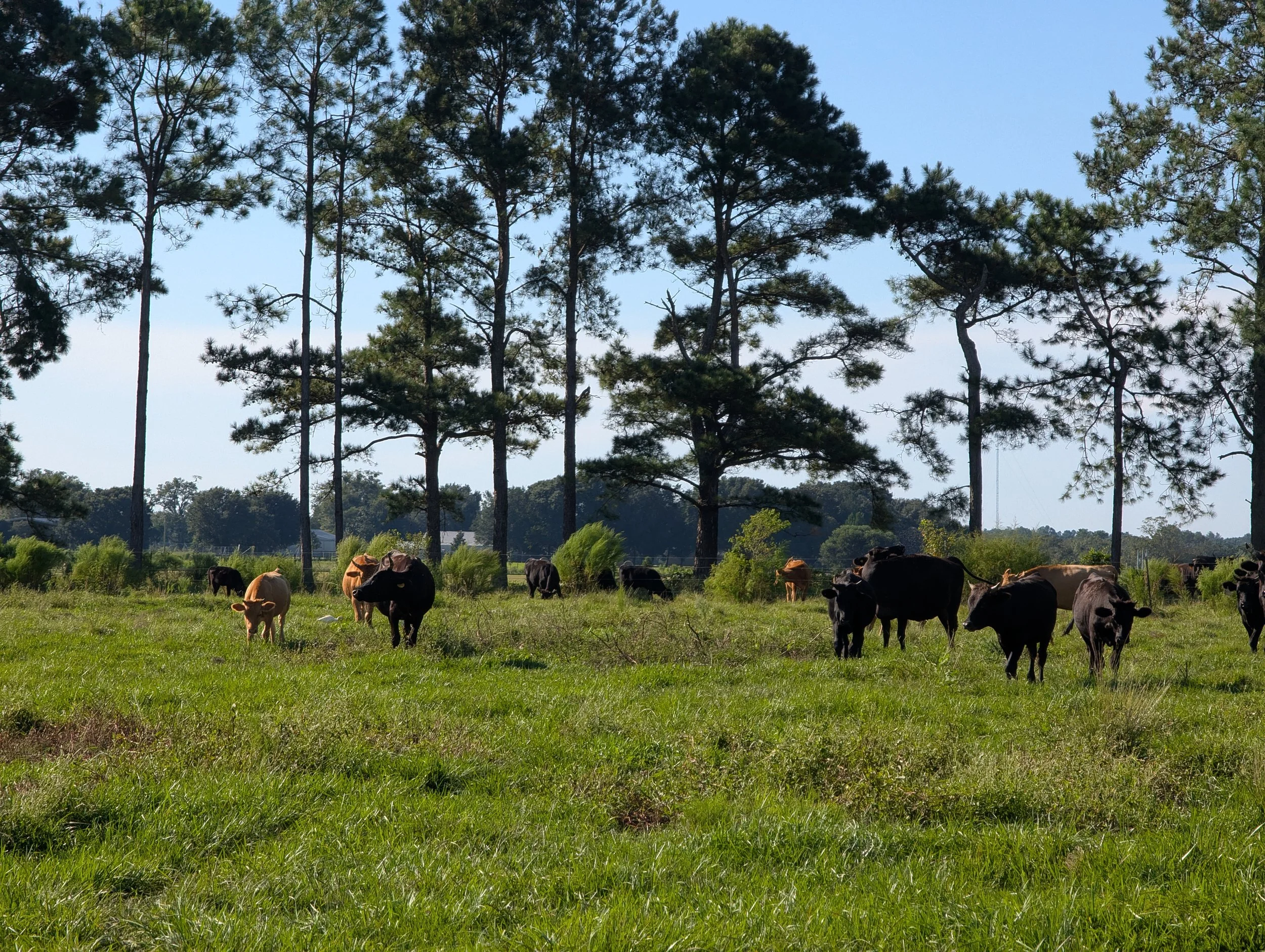
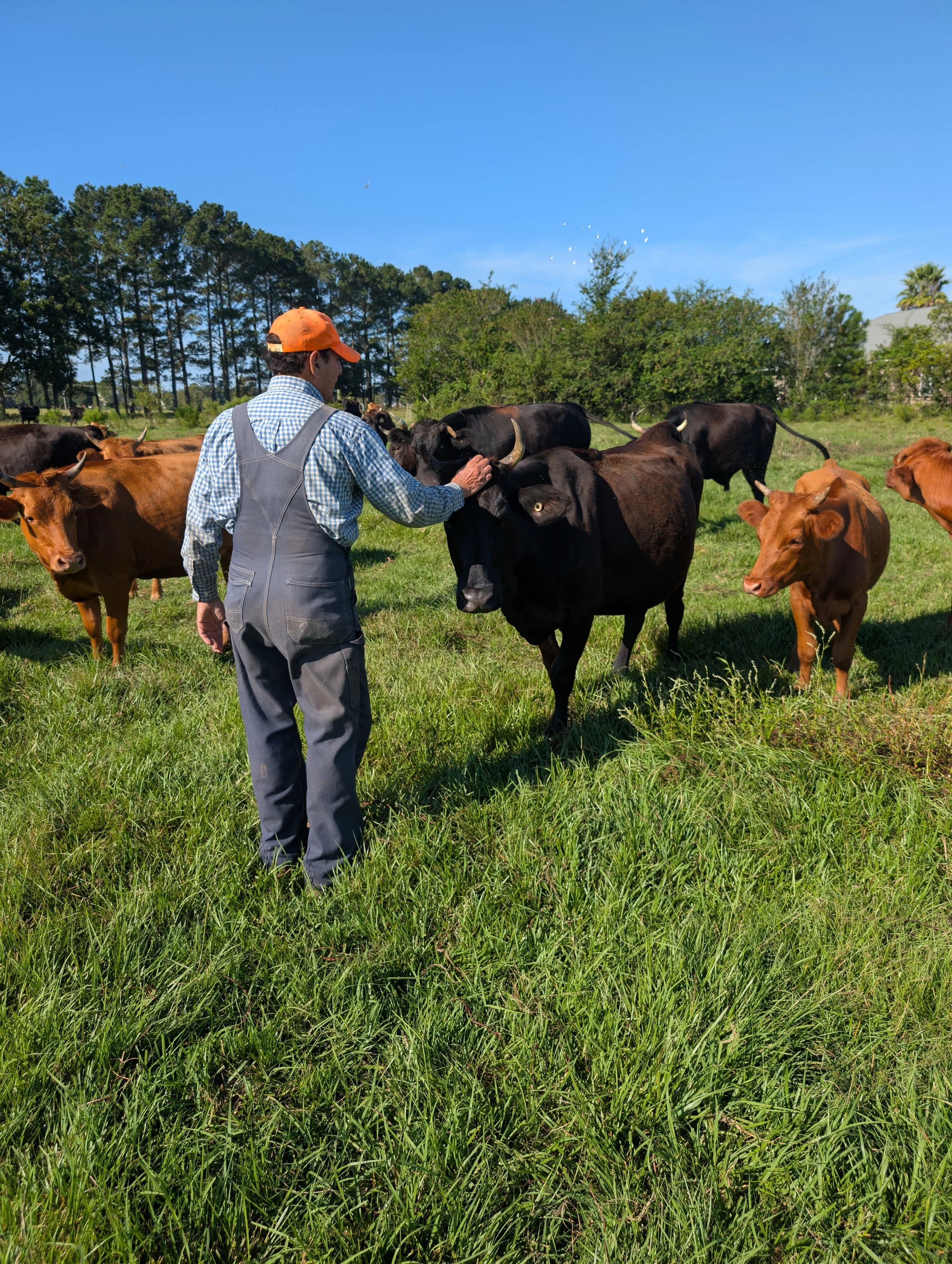
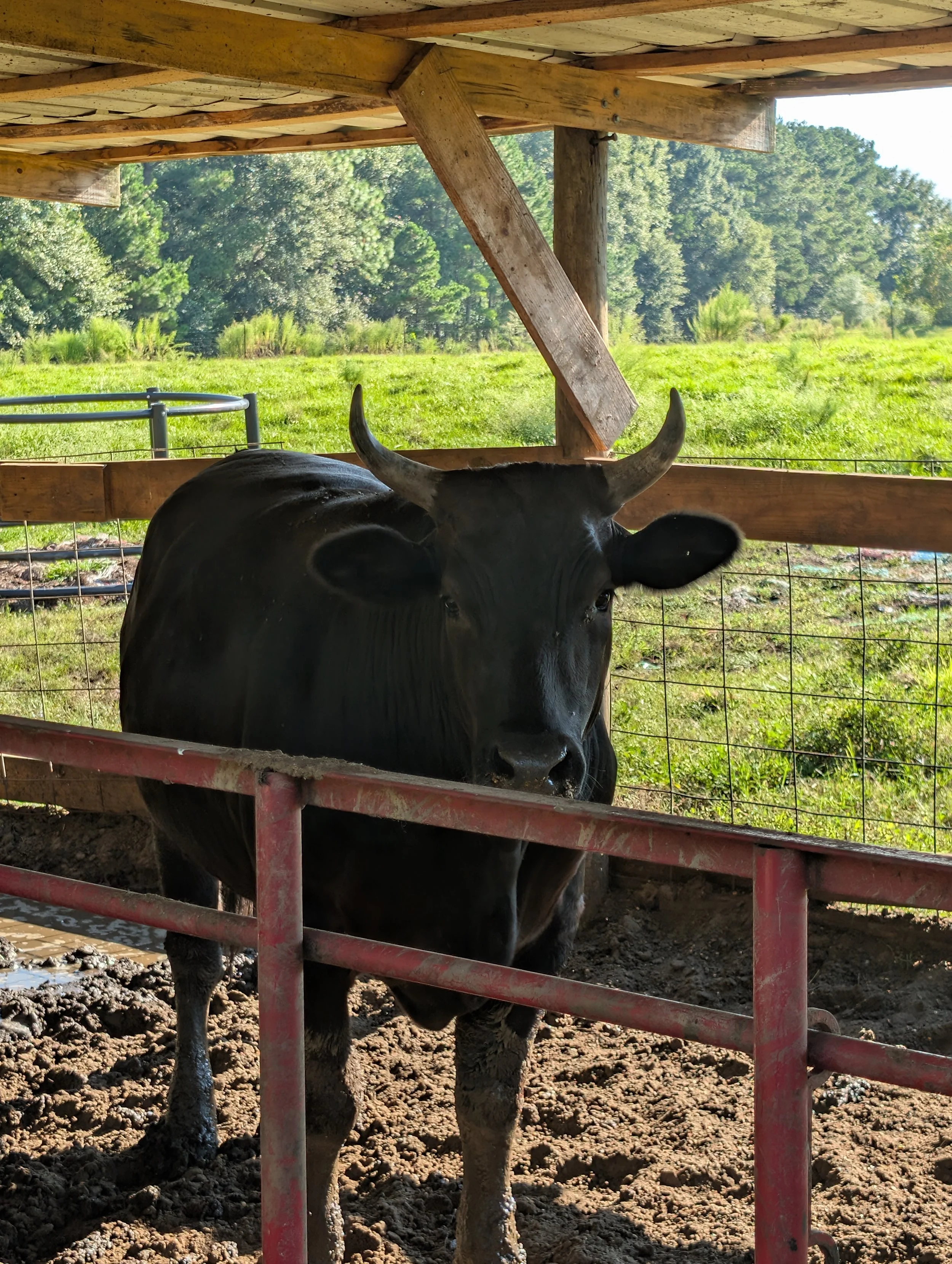
Eugene Fernandes raises Wagyu beef and Berkshire pigs in Elsanor, Alabama. He processes at Perdido River Meats in Atmore. His operation is called Bama Wagyu.
When I arrived at Hope Farm, Eugene was already a supplier. The relationship came with the job. What I have built over the past year is an understanding of what sits behind it.
Wagyu has a reputation in the wrong circles. People hear the word and think of menus that use it as shorthand for expensive.
That is not what this is.
What this is: a farmer who chose a difficult breed because he believed in the quality, who put 225 acres into it, who takes the animal the whole way to a processor he trusts.
The quality of what comes out of Elsanor is a direct result of every decision Eugene made along the way.
That is what Slow Food taught me to look for. Not the label. The decision-making behind it.
The cut we use most is the ground beef. It goes into the burger, which has become one of the most popular things we make at Hope Farm.
There is something I find satisfying about that.
The burger is not a luxury menu item. It is not the dish that announces itself. It's the thing people come back for.
And every time they do, they are eating Wagyu raised down the road by a man who took the long road to get the quality right.
In October we start to move into different territory.
Skirt steak. New York strip. Beef rib.
These are cuts that ask more of the animal and more of the kitchen. Eugene's Wagyu can handle it.
Each one will be its own conversation at the table.
That is the point.
Slow Food's original idea, the one that has stayed with me across Sri Lanka and Virginia and Malaysia and now Alabama, is this:
Food should be good, clean and fair.
Good for the person eating it. Clean in its production. Fair to everyone in the chain, including the animal and the farmer.
That is the standard I bring to my relationship with Eugene and Bama Wagyu.
The Gulf Coast does not have a culture of talking about this the way Italy does or the way the Pacific Northwest does.
That is part of what I want to build through Hideaway.
Not a farm-to-table marketing exercise.
The real story of why what grows and grazes here is worth paying attention to.
In 2027, I am planning to put Eugene's work in front of people directly.
Dinners. Events. A format where the producer is part of the conversation, not just the ingredient list.
I learned in Colombo in 2009 that the distance between a farmer and a diner is the problem. Every time you close that distance, something changes in how people understand what they are eating.
Eugene is a short drive from where I cook.
There is no reason that distance should feel as large as it sometimes does.
We are going to close it.
Elsanor, Alabama · September 2026